Many of us who studied marketing are familiar with McCarthys marketing mix. How his four Ps and the right ingredients of product, price, placement and promotion help to position a brand on the market. Fifty years later and still many marketing departments follow a model that was meant for a world before branding, new technology and hyper competition changed everything. Don’t get me wrong, the four Ps still work great for products but in today’s world where a company selling experiences, association and lifestyles more and more, this model is long since outdated.
Branding today is about positioning a company in the mind of the target group. Companies today focus on building a more emotional and exclusive brand that offers an experience that engages their audience. This is what I named the four Es in brand communication. Just as in McCarthy’s model, each brand needs its own unique recipe. How these ingredients are to be mixed depends on what type of brand it is and in which segment it’s active. For a brand with retail stores the experience is probably more important than for an Internet brand where perhaps engagement is in focus.
In the following four posts I will present how the four Es model works in music branding. How the right music mix helps a brand to be more emotional, engaging, experience based and exclusive. I will start next week with the first post on emotions.
Sounds Like Branding the book is released in Scandinavia in February 2010. Written by Heartbeats International founder Jakob Lusensky, it’s the first in the field of music branding. It tells an exciting story about how brands became record labels and consumers turned into fans. It also presents the models and tools at hand to work with music branding in practice.
Being a great fan of both food and music I found this piece from the University of Gastronimic sciences quite interesting. I am pretty sensitive to when the two do not correlate. I don’t know how many times I have had to tell the waiter to change the selection of music. In my world, the level of understanding of music as a way to enhance the eating experience is greatly underestimated. Of course there are exceptions: I can’t wait to get back to Tokyo to once again to experience dining at the China Blue on the 28th floor of the Conrad Hotel. A beatiful experience for all senses where the Philip Glass inspired music selection greatly enhances the magic of the experience.
Sound moves. Not only is online music service Spotify a cool hit with band fans, it’s catching on with brands too. Read the full article by By Simon Fuller on the great new marketing blog brand-e.biz
“With our music strategy we wanted to cut through the clutter and engage people on their terms, and this is exactly what we have done with the Beat show,” says Penny Welch, sponsorship manager for Samsung UK.
“Music is a marketing tool that can help you achieve your objectives”, says Umut Ozaydinli, global music marketing manager at Coca-Cola.
Watch this interesting video from MediaTV/Brand Republic where he talks about the new ‘Open happiness’ campaign. Mr Ozaydinli talks about the possibilities of working with music on a global basis and the new platforms that emerge through music branding.
Fanta is launching a mobile campaign using ultra sounds which can only be heard by people under the age of 25. It seems to be working out. So far 400 000 teens have downloaded the application. Can you hear it!?
Coca Cola is one of the world’s most successful brands and a company that always understood the true power of music. The “I like to buy the world a Coke” campaign that was launched in the early 1970s and the specific song that was written for it also became a top seller shortly afterwards the rollout of the campaign.
It’s also fascinating to see how well Coke read the mind of the public and their customers around this time. It was in the days of the Vietnam war and political activism stood high up on the agenda of people. The video clearly emphasize on a very socialistic feeling with a universal message of love. People should come together everywhere and of course the elixir for this movement is Coke…
Now almost 40 years later they again put music in the centre of their marketing mix. In the “Open Happiness” campaign they put together the artists/bands WhatFallout Boy, Gym Class Heroes, Panic At The Disco, Cee Lo and Janelle Monae, for a collaborative effort on the song, “Open Happiness”.
“From our perspective, it was a logical choice to inspire people through music,” says Coca-Cola global music marketing manager Umut Ozaydinli.
Clearly Coke understood that the secret recipe in order to be successful in building an emotional connection to people everywhere is music.


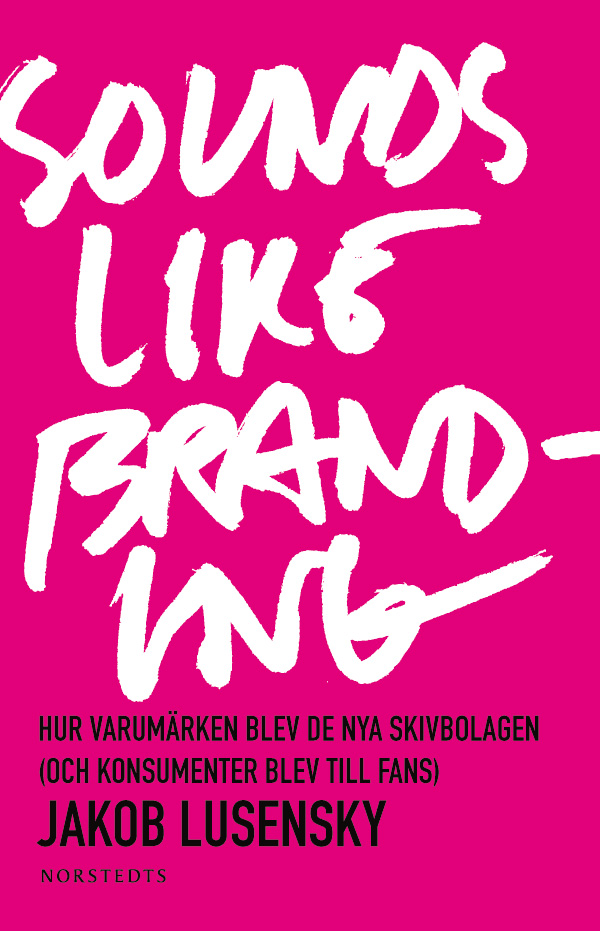 Sounds Like Branding the book is released in Scandinavia in February 2010. Written by Heartbeats International founder Jakob Lusensky, it’s the first in the field of music branding. It tells an exciting story about how brands became record labels and consumers turned into fans. It also presents the models and tools at hand to work with music branding in practice.
  Being a great fan of both food and music I found this piece from the University of Gastronimic sciences
  .
. 
