A purchase decision takes around 2.5 seconds and is anything but rational. Many of the most important decisions we make in our life are based on feelings. A feeling is subjective and often irrational and impulsive. We experience this when we fall in love as well as when we shop.
We consume, love and relate to products both with our hearts and our minds. But in today’s market where supply has long surpassed demand and products are more and more similar, the emotional aspect is the differentiating factor. Emotions, unlike products, cannot be copied or produced cheaply in China.
Music is distilled emotion. People listen to music to set themselves in certain types of moods. It is a companion through life and is ranked as the media they would least like to live without (that is before Internet and mobile phones). Music is the most powerful way of building a more emotional bond with the brand. It circumvents the rational mind and speaks directly to our feelings. Brands that understand the implications of music will be the market leaders of tomorrow.
Many of us who studied marketing are familiar with McCarthys marketing mix. How his four Ps and the right ingredients of product, price, placement and promotion help to position a brand on the market. Fifty years later and still many marketing departments follow a model that was meant for a world before branding, new technology and hyper competition changed everything. Don’t get me wrong, the four Ps still work great for products but in today’s world where a company selling experiences, association and lifestyles more and more, this model is long since outdated.
Branding today is about positioning a company in the mind of the target group. Companies today focus on building a more emotional and exclusive brand that offers an experience that engages their audience. This is what I named the four Es in brand communication. Just as in McCarthy’s model, each brand needs its own unique recipe. How these ingredients are to be mixed depends on what type of brand it is and in which segment it’s active. For a brand with retail stores the experience is probably more important than for an Internet brand where perhaps engagement is in focus.
In the following four posts I will present how the four Es model works in music branding. How the right music mix helps a brand to be more emotional, engaging, experience based and exclusive. I will start next week with the first post on emotions.
Sounds Like Branding the book is released in Scandinavia in February 2010. Written by Heartbeats International founder Jakob Lusensky, it’s the first in the field of music branding. It tells an exciting story about how brands became record labels and consumers turned into fans. It also presents the models and tools at hand to work with music branding in practice.
Sound moves. Not only is online music service Spotify a cool hit with band fans, it’s catching on with brands too. Read the full article by By Simon Fuller on the great new marketing blog brand-e.biz
Fanta is launching a mobile campaign using ultra sounds which can only be heard by people under the age of 25. It seems to be working out. So far 400 000 teens have downloaded the application. Can you hear it!?
This weekend we got a very interesting marketing study that researches key factors for success when creating and implementing a sonic/music identity. Niklas Andersson has a master of science in business and economics at the Lund University in Sweden.
Below are ten of the key conclusions Niklas draws in how to be successful when establishing and implementing your sonic/music identity.
1. Knowing your brand identity, i.e. knowing who you are before trying to convince consumers of who you are, through sonic branding.
2. Conducting a deep and thorough analysis, prior to engaging in the creation of a sound identity; investing sufficient enough of resources for this to be made possible
3. Understanding that when determining core values, tied to a company´s or brand´s identity, one must also include a consideration to them being suitable, as far as being possible to clearly and distinctly recreate as music and sounds
4. Gaining knowledge of the tastes and preconditions of certain targeted groups
5. Differentiating the transmitted core values of a sound identity from that of competitors, so that it can become clear and unique
6. Understanding that certain core values, when attempted to be translated into music and sounds, may lie very close to being perceived in a completely different, and perhaps greatly undesired way.
7. Reaching internal conviction within companies, of the reasons for a certain sound identity´s components and attributes. If co-workers are not entirely convinced of the cleverness and importance of its sound identity, they may reject it and in so increase
the risk of it rather weakening as opposed to strengthening the image of the brand
8. If possible, conducting consumer tests prior to the implementation of a sound identity, testing its perceived values by measuring emotional association
9. Enabling a sophisticated marriage between sonic and visual attributes; in so creating the sense of overall aesthetic appeal
10. Reviewing and, if needed, modifying a company´s sound purchasing strategy, in so possibly saving large amounts of resources, as well as increasing the chances of creating a unified sound identity
Michael Jackson was not only the king of pop. His groundbreaking endorsement deal with Pepsi Coke in the early 1980s still should work as a reference for brands taking the logic next step in to music. Respect!
Traditional marketing is dying. Studies show that 75% actively avoid all type of advertising. Whether it’s on TV, billboards or the Internet. The audience is increasingly more and more fragmented, more critical and harder to reach. At the same time people are spending more time on social media networks. Places where music is an engine for interaction. Could music branding be the golden ticket for tomorrow’s marketers?
 A purchase decision takes around 2.5 seconds and is anything but rational. Many of the most important decisions we make in our life are based on feelings. A feeling is subjective and often irrational and impulsive. We experience this when we fall in love as well as when we shop.

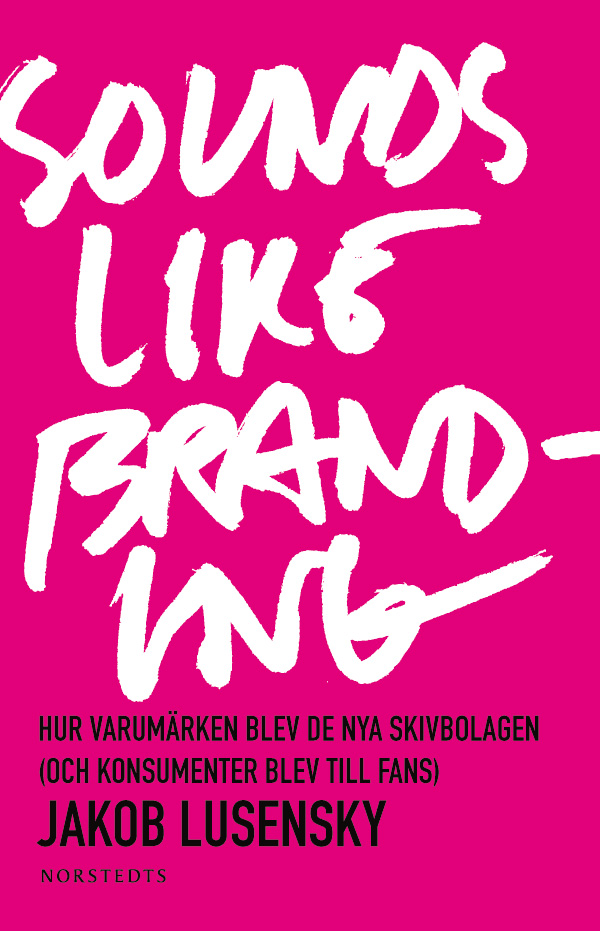 Sounds Like Branding the book is released in Scandinavia in February 2010. Written by Heartbeats International founder Jakob Lusensky, it’s the first in the field of music branding. It tells an exciting story about how brands became record labels and consumers turned into fans. It also presents the models and tools at hand to work with music branding in practice.
  .
. 
